

If this is your first time in Kumamoto, this course is highly recommended!
All of the spots are within a walking distance of each other. A very convenient route.
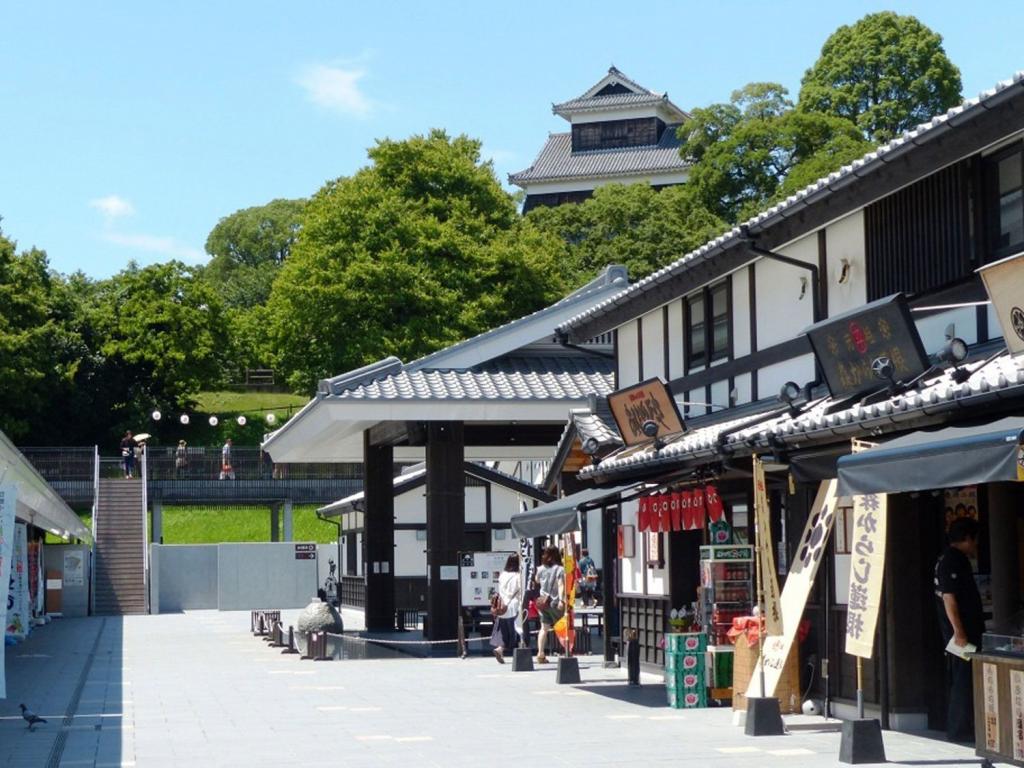
Sakuranobaba Johsaien is a tourism and cultural exchange facility at the foot of Kumamoto Castle, where you can eat, see, and experience Kumamoto. At Kumamoto Castle Museum Wakuwakuza, you can learn about the history of Kumamoto through interactive and virtual exhibits with foreign-language signs and subtitles. Sakuranokoji, a shopping and dining area modeled after an Edo-period castle town, has more than 20 shops and restaurants where you can try local specialty foods and buy souvenirs. The Tourist Information Center on the grounds offers pamphlets and maps in four languages (Japanese, English, Korean, and Chinese), and volunteer tour guides are available to tell you about the area.
5min. walk

Also known as Ginnan-jyo, Kumamoto Castle is one of the three greatest castles of Japan. The construction of the castle began in 1601 by the famous lord, Kato Kiyomasa, and took seven years for its completion.
* Kumamoto Castle suffered serious damage in an earthquake that struck in April 2016. There are many areas of the castle that are closed to the public, but the main castle tower and turrets can be viewed from outside, with good vantage points from Ninomaru Square and Kato Shrine.
5min. walk

Enshrined here at this shrine are Katō Kiyomasa, Ōki Kaneyoshi and Kin.
Then-named ”Nishikiyama Shrine” was built within Kumamoto Castle premises at the order of the government to separate Buddhism and Shintoism in 1871. Then, it was eventually relocated in 1874 to Kyomachi, Kumamoto City; since the castle property had been acquired by the Japanese Army.
The present day Kato Shrine was finally rebuilt on January 23rd, 1962; at the 2-1 Honmaru, Chuo-ku, Kumamoto City address.
1min. walk
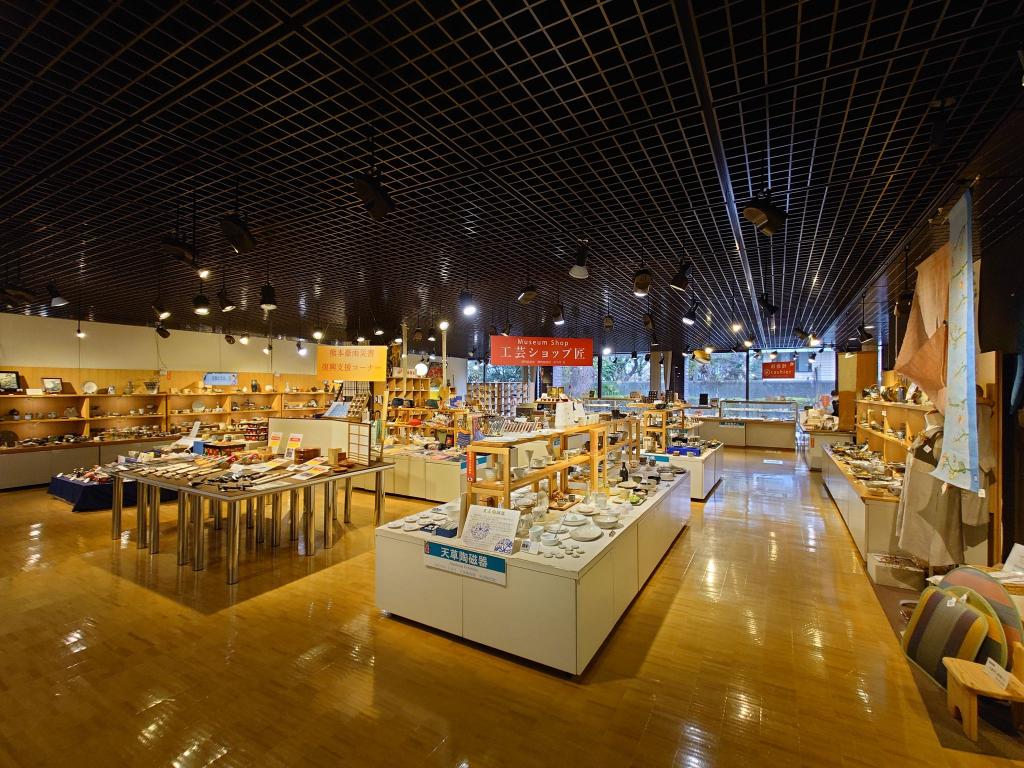
Kumamoto Prefectural Traditional Crafts Center showcases traditional crafts designated by the prefecture, including Higo Zogan (inlay), wood and bamboo crafts, textiles, ceramics, and knives. Visitors can browse the displays, shop at the on-site store, and place special orders. Folk toys such as Hikoichi Koma, Obake no Kinta, Konoha-zaru, and Kiji-uma are also on sale. Admission is free (special exhibitions on the 2nd floor are charged).